Moissanite vs Lab Grown Diamond is one of the most common comparisons for shoppers looking for brilliant, durable and modern jewelry. Both stones can create a beautiful diamond-inspired appearance, but they differ in composition, sparkle, price and overall character.
The right choice depends on what matters most to you. Some shoppers prefer the colorful brilliance and accessible price of moissanite, while others want the material, appearance and identity of a real diamond grown in a laboratory.
This guide explains the most important differences so you can choose confidently for an engagement ring, everyday necklace, meaningful gift or personal reward.
What Is Moissanite?
Moissanite is a gemstone composed of silicon carbide. Most jewelry-quality moissanite available today is created in a laboratory because naturally occurring material is extremely rare.
Although it can resemble a diamond, moissanite is not a diamond. It has its own chemical composition, optical behavior and visual personality.
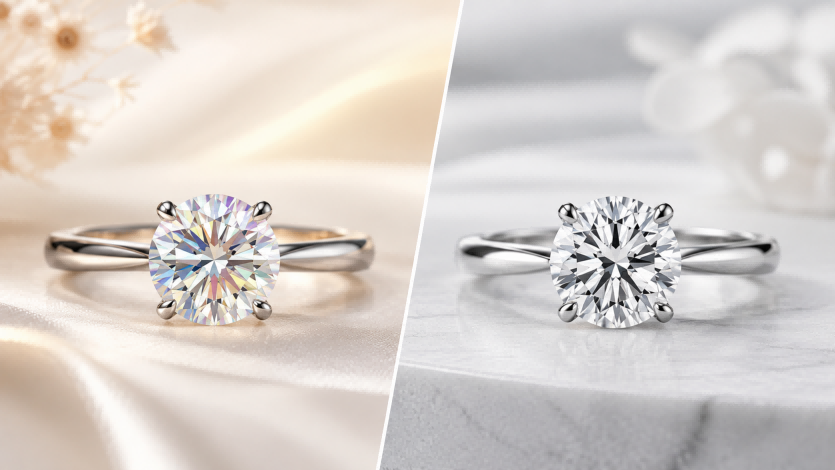
Moissanite is especially known for its intense fire. Under direct light, it can produce noticeable rainbow-colored flashes that create a bright and lively appearance. This distinctive sparkle makes it popular for engagement rings, earrings, pendants and other jewelry designed to attract attention.
With a hardness of approximately 9.25 on the Mohs scale, moissanite is also highly resistant to scratching and suitable for regular wear.
What Is a Lab-Grown Diamond?
A lab-grown diamond is a real diamond created in a controlled laboratory environment rather than formed beneath the earth. It consists of carbon and has essentially the same crystal structure and physical properties as a natural diamond.
Laboratory-grown diamonds are commonly produced through High Pressure High Temperature, known as HPHT, or Chemical Vapor Deposition, known as CVD.
To the unaided eye, a high-quality lab-grown diamond may look the same as a comparable natural diamond. Specialized equipment and trained gemological laboratories can identify differences in growth patterns and other characteristics.
Lab-grown diamonds should always be clearly described as laboratory-grown or laboratory-created so customers understand their origin.
Moissanite vs Lab Grown Diamond: Key Differences
| Feature | Moissanite | Lab-Grown Diamond |
|---|
| Material | Silicon carbide | Carbon |
| Gemstone identity | Independent gemstone and diamond simulant | Real diamond grown in a laboratory |
| Sparkle | Strong rainbow-colored fire | Balanced brilliance, fire and scintillation |
| Hardness | Approximately 9.25 Mohs | 10 Mohs |
| Price | Generally more affordable | Usually costs more than moissanite |
| Best for | Maximum sparkle and accessible luxury | Customers who want a real diamond |
Which Stone Has More Sparkle?
Both stones sparkle beautifully, but they do not sparkle in exactly the same way.
Moissanite produces strong fire, meaning it separates light into vivid rainbow-colored flashes. This effect may become particularly noticeable in larger stones and under bright direct lighting.
A lab-grown diamond typically produces a more familiar diamond appearance, combining white brilliance with smaller flashes of spectral color. Its sparkle may look more restrained and traditional compared with moissanite.
Choose moissanite if you enjoy lively, colorful brilliance. Choose a lab-grown diamond if you prefer the classic visual character of a diamond.
Which Is Better for Everyday Wear?
Both materials are durable enough for everyday jewelry when they are placed in a secure setting and cared for properly.
Diamond ranks 10 on the Mohs hardness scale, making it highly resistant to scratching. Moissanite ranks approximately 9.25, which also places it among the hardest gemstones commonly used in jewelry.
However, hardness does not make any piece completely indestructible. Prongs, chains and metal settings can still bend or wear over time. Remove fine jewelry before heavy exercise, housework, swimming or contact with harsh chemicals.
Which Is More Affordable?
Moissanite is generally the more accessible choice. It allows shoppers to select a larger-looking center stone or a more detailed design while maintaining a lower overall budget.
Lab-grown diamonds often cost less than comparable natural diamonds, but they usually remain more expensive than moissanite. Their price can vary according to carat weight, cut, color, clarity, shape, certification and setting material.
For shoppers who prioritize size and visible sparkle, moissanite may provide greater flexibility. For customers who specifically want the identity of a real diamond, a lab-grown diamond may justify the additional cost.
Which Is Better for an Engagement Ring?
There is no universal answer because the best engagement ring should reflect the wearer’s preferences, values and lifestyle.
Choose Moissanite If You Prefer:
- A more accessible price
- Strong rainbow-like fire
- A larger visual size within a limited budget
- A durable gemstone for regular wear
- A distinctive alternative to a diamond
Choose a Lab-Grown Diamond If You Prefer:
- A real diamond rather than a diamond simulant
- A traditional diamond appearance
- Diamond grading based on cut, color, clarity and carat
- A modern alternative to a mined natural diamond
- The symbolic identity commonly associated with diamonds
Moissanite vs Lab Grown Diamond for Necklaces and Earrings
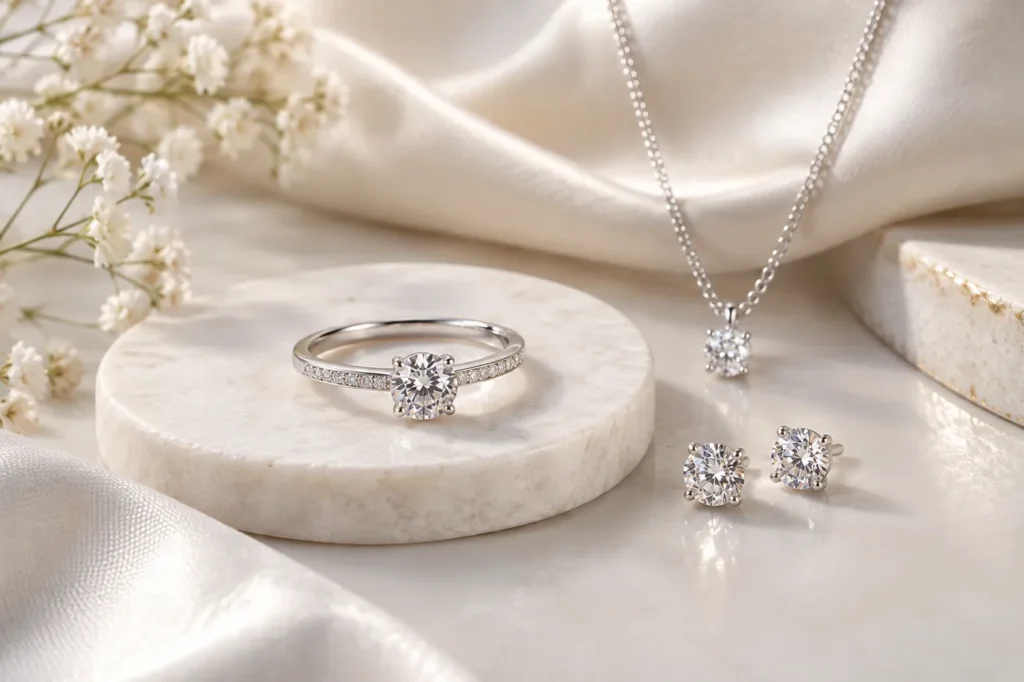
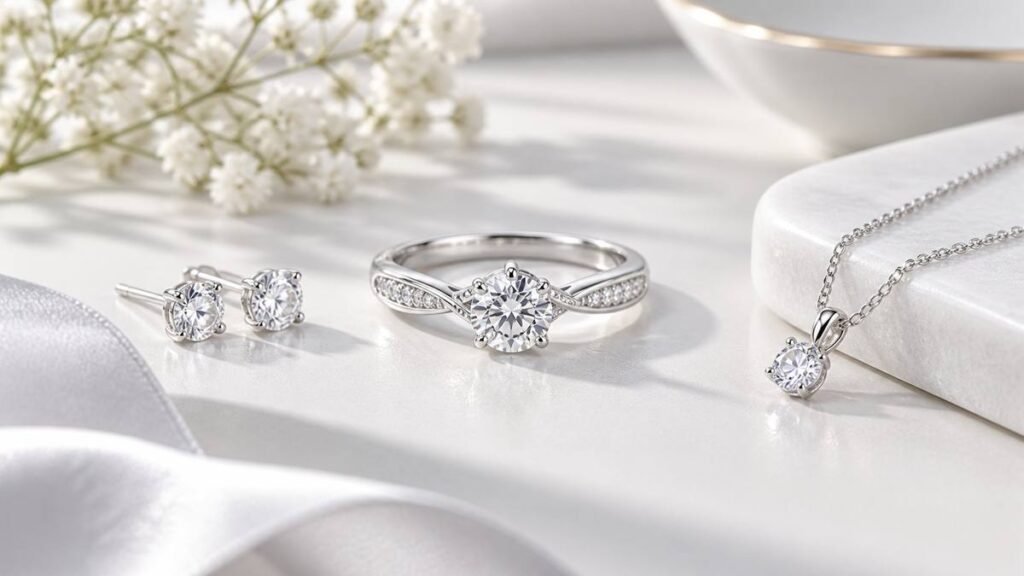
Moissanite can be especially attractive in everyday necklaces, earrings and bracelets because its bright fire remains visible even in smaller designs. It is also suitable for customers who want sparkling jewelry that can be worn regularly without requiring a large budget.
Lab-grown diamonds are ideal for classic solitaire pendants, tennis bracelets, stud earrings and milestone gifts. Their diamond identity may add emotional meaning for anniversaries, engagements, graduations and other important moments.
Both choices can look refined in S925 sterling silver, gold, platinum or other suitable jewelry settings. The quality of the cut and craftsmanship can significantly influence the finished appearance.
How to Choose Between Moissanite and Lab-Grown Diamond
Before making a decision, consider these questions:
- Do you specifically want a real diamond?
- Do you prefer white brilliance or colorful rainbow fire?
- What is your total jewelry budget?
- Would you rather prioritize gemstone size or gemstone identity?
- Will the jewelry be worn daily or only on special occasions?
- Is the piece intended as a personal purchase or a symbolic gift?
If your priority is accessible brilliance and a larger visual presence, moissanite may be the better match. If your priority is owning a real diamond with a classic appearance, consider a lab-grown diamond.
How to Care for Both Gemstones
Moissanite and lab-grown diamond jewelry can collect oil, lotion, perfume and everyday residue. Regular gentle cleaning helps maintain their brilliance.
- Mix warm water with a small amount of mild soap.
- Soak the jewelry briefly.
- Use a soft brush around the stone and setting.
- Rinse carefully with clean water.
- Dry with a soft, lint-free cloth.
- Store each piece separately to reduce scratching and tangling.
Avoid harsh household chemicals and do not use aggressive cleaning methods unless they are approved for the gemstone, metal and setting.
Explore Moissanite and Lab-Grown Diamond Jewelry
Both gemstones offer beauty, durability and modern versatility. Moissanite delivers intense fire and accessible luxury, while a lab-grown diamond provides the material identity and classic appearance of a real diamond.
Explore the SIGLO jewelry collection to discover rings, necklaces, earrings and bracelets designed for elegant everyday wear and meaningful gifting.
Continue reading our Moissanite vs Diamond guide or learn more in the Lab-Grown Diamond Jewelry Guide.
For independent gemstone education, visit the GIA guide to moissanite and lab-grown diamonds.
Frequently Asked Questions
Is moissanite a lab-grown diamond?
No. Moissanite is a separate gemstone made from silicon carbide, while a lab-grown diamond consists of carbon and has the crystal structure of a diamond.
Are lab-grown diamonds real diamonds?
Yes. Lab-grown diamonds are real diamonds created in a laboratory. They are not mined natural diamonds, so their origin should always be disclosed clearly.
Does moissanite last as long as a diamond?
Moissanite is highly durable and suitable for regular wear. Proper care and a secure setting can help both moissanite and diamond jewelry remain beautiful for many years.
Which looks more like a natural diamond?
A lab-grown diamond has the same fundamental material and optical behavior as a natural diamond. Moissanite can resemble a diamond but may show stronger rainbow-colored flashes.
Which is better for a limited budget?
Moissanite is generally more affordable and may allow you to choose a larger-looking stone or more detailed design within the same budget.
Which one should I choose?
Choose moissanite for colorful brilliance, durability and accessible pricing. Choose a lab-grown diamond when owning a real diamond and achieving a classic diamond appearance are your main priorities.