S925 vs S999 Silver is an important comparison for anyone choosing necklaces, rings, earrings, bracelets or meaningful silver gifts. Both materials contain genuine silver, but their purity, strength, appearance and ideal uses are different.
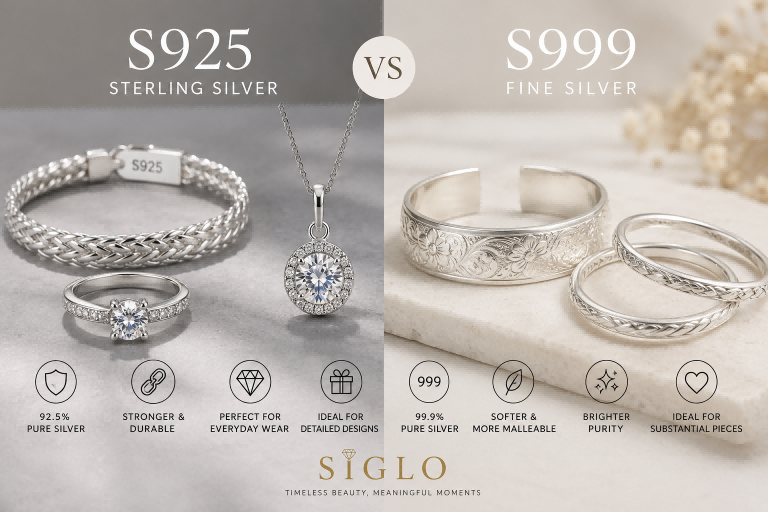
S925 sterling silver contains 92.5% pure silver combined with 7.5% alloying metals. S999 fine silver contains approximately 99.9% pure silver. A higher purity number does not automatically mean that one material is better for every jewelry design.
The right choice depends on the structure of the piece, how often you plan to wear it and whether you prefer practical durability or a higher-purity silver composition.
What Is S925 Sterling Silver?
S925 sterling silver is an alloy containing 92.5% pure silver and 7.5% other metals, commonly including copper. The additional metal improves strength and helps the jewelry maintain its shape during regular wear.
You may see S925 jewelry marked with:
- 925
- S925
- Sterling
- Sterling Silver
Sterling silver is widely used for rings, necklaces, earrings, bracelets, gemstone settings, clasps and detailed jewelry because it balances genuine silver content with practical durability.
What Is S999 Fine Silver?
S999 fine silver contains approximately 99.9% pure silver and only a very small proportion of other elements. It may also be described as fine silver, pure silver or 999 silver.
Its high silver content gives it a naturally bright precious-metal appearance. However, fine silver is softer than sterling silver. As a result, the design, thickness and construction of an S999 piece are especially important.
S999 silver is often used for substantial chains, symbolic bracelets, traditional-inspired pieces, pendants and jewelry designed with enough thickness to support its structure.
S925 vs S999 Silver: Main Differences
| Feature | S925 Sterling Silver | S999 Fine Silver |
|---|
| Silver purity | 92.5% | Approximately 99.9% |
| Additional metals | Approximately 7.5% | Approximately 0.1% |
| Strength | Stronger and more suitable for detailed structures | Softer and more malleable |
| Common uses | Rings, earrings, necklaces, stone settings and bracelets | Substantial chains, symbolic pieces and selected traditional designs |
| Everyday practicality | Excellent for regular wear | Depends strongly on thickness and construction |
| Appearance | Bright polished silver | High-purity silver character |
Is S999 Silver Better Than S925?
S999 has a higher percentage of pure silver, but that does not make it universally better.
For a delicate ring, gemstone setting, thin chain or detailed clasp, S925 may provide greater structural stability. The added alloying metals help the jewelry resist bending and hold intricate shapes more effectively.
For a substantial bracelet, pendant or symbolic piece where high silver purity is an important part of the design, S999 may be an attractive choice.
Therefore, the best material is not determined by purity alone. Good jewelry design should match the metal to the structure and intended use of the piece.
Which Silver Is Better for Everyday Wear?
S925 sterling silver is generally the more practical option for frequent everyday wear. Its increased strength supports delicate chains, secure clasps, prongs and gemstone settings.
This makes S925 especially suitable for:
- Everyday necklaces
- Stud and drop earrings
- Gemstone rings
- Moissanite jewelry
- Delicate bracelets
- Jewelry with detailed settings
S999 jewelry can also be worn regularly when the piece has a substantial and well-supported design. However, thinner fine-silver jewelry may be more vulnerable to bending, dents or surface marks.
Which Silver Is Better for Rings?
S925 is usually the preferred choice for rings, particularly those with gemstones or intricate settings. Rings experience frequent contact with tables, bags, doors and everyday objects, so structural strength matters.
S999 may be suitable for thicker bands or intentionally organic designs. Nevertheless, a delicate S999 ring may change shape more easily than a comparable sterling silver ring.
For moissanite, zircon or crystal rings, S925 offers a useful balance between bright silver beauty and setting security.
Which Silver Is Better for Necklaces?
Both materials can work well for necklaces, depending on the design.
S925 is ideal for fine chains, detailed pendants, adjustable extensions and lobster clasps. Its strength makes it suitable for lightweight and intricate necklace construction.
S999 can be attractive for heavier chains, substantial pendants and statement necklaces. When choosing a fine-silver necklace, pay attention to the link thickness, clasp construction and overall weight distribution.
Which Silver Is Better for Bracelets?
S925 works well for delicate chain bracelets, gemstone bracelets and designs with multiple small links. It is also suitable for everyday bangles that require consistent shape retention.
S999 is popular for substantial link bracelets, symbolic silver designs and selected traditional-inspired pieces. A thicker construction helps compensate for the natural softness of high-purity silver.
For either material, check the clasp, connecting rings and link construction because these areas receive regular movement and pressure.
Does S925 or S999 Silver Tarnish?
Both S925 and S999 silver can change appearance over time when exposed to air, moisture, sulfur-containing substances, cosmetics and household chemicals.
S925 may develop darker surface tarnish because its alloying metals can react with the environment. S999 has less alloying metal, but it is not completely maintenance-free.
Tarnish is generally a surface reaction rather than proof that the jewelry is fake. Regular gentle cleaning and proper storage can help maintain the silver’s brightness.
Does S925 Silver Turn Skin Green?
Most people can wear quality sterling silver comfortably. However, moisture, sweat, cosmetics and the other metals in an alloy can sometimes create temporary discoloration on the skin.
This reaction does not necessarily mean that the jewelry is low quality. Individual skin chemistry, climate and product exposure can affect the result.
Keep silver jewelry clean and dry, and remove it before swimming, heavy exercise or using strong household products.
How to Identify S925 and S999 Silver
Check the jewelry for a purity mark, although the location and style may vary.
Common S925 Marks
Common S999 Marks
A stamp is helpful, but it should not be the only evidence of material quality. Product documentation, trustworthy descriptions and reliable sellers are also important.
How to Care for S925 and S999 Silver Jewelry
Good care helps both materials retain their finish and shape.
- Remove jewelry before swimming, bathing or heavy exercise.
- Avoid perfume, hairspray, lotion and household chemicals.
- Wipe each piece with a soft cloth after wearing.
- Store jewelry in a dry pouch or sealed jewelry bag.
- Keep separate pieces apart to reduce scratching and tangling.
- Use gentle silver-cleaning methods suitable for gemstones and finishes.
Because fine silver is softer, use extra care when cleaning or storing delicate S999 pieces. Avoid pressing, twisting or stacking them beneath heavier jewelry.
Which Silver Is Better for Sensitive Skin?
Silver purity alone cannot guarantee how every person’s skin will respond. S999 contains less alloying metal, while S925 contains a larger proportion of strengthening metals.
However, the exact alloy composition, surface treatment and individual sensitivity all matter. Customers with known metal sensitivities should review the product materials carefully and seek professional medical advice when necessary.
S925 vs S999 Silver for Jewelry Gifts
Both options can make meaningful gifts.
Choose S925 for someone who wants versatile jewelry suitable for office wear, daily outfits, dates and special occasions. Sterling silver works especially well for elegant rings, pendants and gemstone pieces.
Choose S999 for someone who appreciates high-purity silver, substantial craftsmanship, symbolic designs or traditional precious-metal character.
The emotional value of the gift ultimately comes from the design, meaning and memory connected to the person wearing it.
How to Choose the Right Silver Jewelry
Before purchasing, consider the following questions:
- Will the jewelry be worn every day?
- Is the design delicate or substantial?
- Does the piece hold gemstones?
- Is high silver purity important to the wearer?
- Does the clasp or setting require additional strength?
- Is the piece intended for personal wear or gifting?
Choose S925 when you want everyday durability, detailed craftsmanship and secure gemstone settings. Choose S999 when you prefer higher silver purity and a substantial design created to suit the softer metal.
Explore S925 and S999 Silver Jewelry
S925 and S999 both offer genuine silver beauty, but they serve different design needs. Sterling silver combines purity with practical strength, while fine silver offers a higher silver content and distinctive precious-metal character.
Explore the SIGLO sterling silver jewelry collection for elegant necklaces, rings, earrings and bracelets designed for everyday styling.
You can also browse the complete SIGLO jewelry shop to discover S925 and S999 designs for meaningful gifts and personal expression.
For official information about silver markings, visit the FTC guide to buying silver jewelry and the London Assay Office hallmark guide.
Frequently Asked Questions
Is S925 real silver?
Yes. S925 sterling silver contains 92.5% pure silver combined with approximately 7.5% strengthening alloy metals.
Is S999 pure silver?
S999 contains approximately 99.9% pure silver and is commonly described as fine silver or high-purity silver.
Why is S925 more common in jewelry?
The alloying metals make S925 stronger than fine silver, which helps detailed jewelry, chains, clasps and gemstone settings maintain their structure.
Can S999 silver be worn every day?
Yes, particularly when the piece has a substantial, well-supported construction. Thin S999 jewelry may require more careful handling because fine silver is softer.
Which costs more, S925 or S999?
S999 contains more pure silver by weight, but the final jewelry price also depends on weight, craftsmanship, design complexity, gemstones and branding.
Which one should I choose?
Choose S925 for versatile everyday jewelry and detailed gemstone designs. Choose S999 for higher-purity silver pieces with substantial construction and symbolic character.