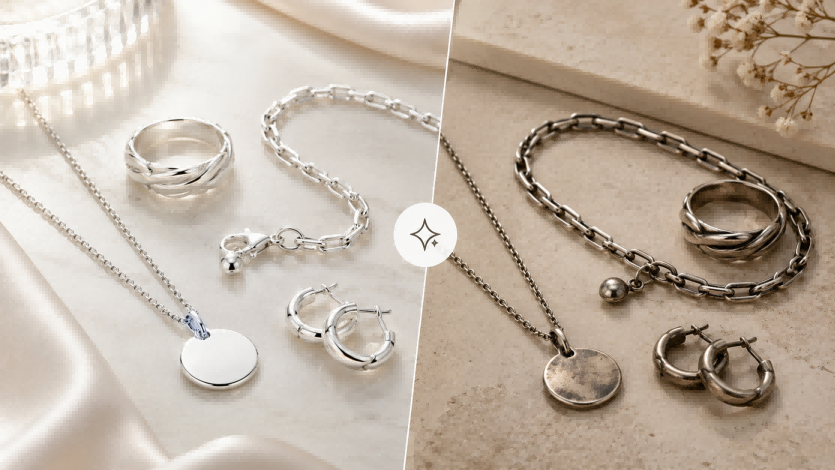
Does sterling silver tarnish? Yes, genuine sterling silver can gradually develop a darker or duller surface when it reacts with substances in the surrounding environment. This change is called tarnish, and it does not automatically mean that the jewelry is fake, damaged or low quality.
S925 sterling silver contains 92.5% pure silver and approximately 7.5% strengthening alloy metals. These additional metals help silver jewelry maintain its shape, but they may also react with air, moisture, cosmetics and sulfur-containing substances.
Fortunately, most silver tarnish affects only the surface. With appropriate cleaning, storage and everyday care, sterling silver jewelry can retain its bright and elegant appearance for many years.
What Is Sterling Silver Tarnish?
Tarnish is a surface reaction that may cause silver jewelry to appear yellow, brown, gray or black. It develops gradually when the metal reacts with substances such as sulfur compounds, moisture and environmental pollutants.
The change may begin in small areas, including:
- Chain links
- Ring interiors
- Clasp openings
- Engraved details
- Areas close to the skin
- Settings around gemstones
Because these areas can collect moisture, oils and product residue, they may tarnish more quickly than exposed polished surfaces.
Why Does Sterling Silver Tarnish?
Several everyday factors can accelerate discoloration.
Exposure to Air
Silver jewelry begins interacting with its environment as soon as it is exposed to air. Tarnish may develop more quickly in areas with humidity, pollution or sulfur-containing compounds.
Moisture and Humidity
Bathrooms, swimming pools, humid climates and damp storage areas can increase the speed of surface reactions. For this reason, silver jewelry should be dried carefully and stored away from persistent moisture.
Sweat and Natural Skin Oils
Skin chemistry varies from person to person. Sweat, body oils and acidity may affect how quickly a piece changes appearance. One person may wear sterling silver frequently with little visible tarnish, while another may notice discoloration sooner.
Perfume, Lotion and Cosmetics
Perfume, hairspray, sunscreen, makeup and body lotion may leave residue on the metal. Over time, this buildup can reduce brilliance and contribute to a darker appearance.
Household Chemicals
Cleaning products, bleach and other strong chemicals may damage silver finishes, gemstones or plating. Remove jewelry before cleaning, washing dishes or handling chemicals.
Swimming and Bathing
Chlorinated water, salt water and personal care products may affect silver jewelry. Remove sterling silver before entering pools, the sea, hot tubs or showers.
Does Real Sterling Silver Turn Black?
Yes. Authentic sterling silver can develop black tarnish. In fact, natural tarnishing is compatible with genuine silver and does not prove that the material is fake.
However, not every dark surface has the same cause. Discoloration may also come from:
- Dirt and skin oil
- Cosmetic residue
- Intentional oxidized finishing
- Worn plating
- Contact with harsh chemicals
If the jewelry features an intentional vintage or oxidized finish, aggressive polishing may remove part of the original design. Review the product description before cleaning.
Does S925 Sterling Silver Tarnish?
Yes. S925 sterling silver may tarnish because it combines pure silver with strengthening alloy metals. The 925 mark identifies the silver content; it does not mean the jewelry will remain completely unchanged without care.
Its durability makes S925 suitable for:
- Necklaces
- Rings
- Earrings
- Bracelets
- Moissanite settings
- Zircon and crystal jewelry
Regular wear is not necessarily harmful. In some cases, gentle contact with clothing and routine wiping may help reduce surface buildup. However, moisture and product residue should still be removed after wearing.
Does S999 Fine Silver Tarnish?
S999 fine silver contains approximately 99.9% pure silver and much less alloying metal than S925. It may tarnish differently or more slowly under some conditions, but it is not completely immune to environmental changes.
Fine silver is also softer than sterling silver. Therefore, an S999 piece may require additional care to prevent scratches, dents or bending, especially when the design is thin or delicate.
For a detailed comparison, read our guide to S925 vs S999 silver.
How Long Does Sterling Silver Take to Tarnish?
There is no single timeframe. Tarnish may appear within weeks, months or years depending on:
- Humidity
- Climate
- Air quality
- Frequency of wear
- Skin chemistry
- Storage conditions
- Exposure to beauty products
- Contact with water and chemicals
Jewelry stored in a dry, sealed pouch may remain bright longer than a piece left uncovered in a humid bathroom.
How to Prevent Sterling Silver from Tarnishing
You cannot always prevent every surface change, but the following habits can reduce tarnish significantly.
Put Jewelry on Last
Apply perfume, lotion, sunscreen, makeup and hairspray before wearing jewelry. Allow the products to dry before putting on silver pieces.
Remove Jewelry Before Water Exposure
Take off sterling silver before bathing, swimming, exercising heavily or entering a hot tub.
Wipe Jewelry After Wearing
Use a clean, soft and lint-free cloth to remove moisture, fingerprints and skin oils. This simple habit can help preserve the polished finish.
Store Each Piece Separately
Place necklaces, rings, earrings and bracelets in separate soft pouches or compartments. Separate storage helps reduce scratching, tangling and unnecessary air exposure.
Use a Dry, Sealed Storage Bag
A small sealed jewelry bag can limit contact with air and humidity. Make sure the jewelry is completely dry before sealing it.
Avoid Bathroom Storage
Bathrooms are often warm and humid. Store silver jewelry in a dry wardrobe, drawer or jewelry box instead.
How to Clean Sterling Silver Jewelry at Home
For lightly tarnished, unplated sterling silver jewelry without delicate gemstones, a gentle soap-and-water method is often suitable.
Gentle Cleaning Method
- Fill a small bowl with lukewarm water.
- Add a few drops of mild, fragrance-free soap.
- Place the jewelry in the solution briefly.
- Use a very soft brush around links and settings.
- Rinse carefully with clean lukewarm water.
- Dry completely with a soft, lint-free cloth.
Do not leave silver jewelry wet after cleaning. Moisture trapped inside links, clasps or settings may contribute to future discoloration.
Can You Use a Silver Polishing Cloth?
A silver polishing cloth can help remove light tarnish from plain, polished sterling silver. Use gentle pressure and follow the cloth manufacturer’s instructions.
However, use caution with:
- Gold-plated silver
- Rhodium-plated silver
- Blackened or oxidized finishes
- Pearls
- Opals
- Porous gemstones
- Antique-style surface treatments
Excessive polishing may gradually remove plating or intentional surface details.
Can You Clean Silver with Baking Soda?
Baking soda is mildly abrasive. Although it is frequently recommended online, it may scratch polished surfaces or affect plating, gemstones and delicate finishes.
For valuable, plated or gemstone-set jewelry, start with a gentle soap solution or ask a professional jeweler for advice. Avoid aggressive homemade mixtures unless they are confirmed safe for every material in the piece.
Can Toothpaste Clean Sterling Silver?
Toothpaste is not recommended for fine jewelry. Many formulas contain abrasive particles, whitening agents or chemicals that may scratch silver and damage surface finishes.
Use products made specifically for jewelry or choose gentle cleaning methods appropriate for the metal and gemstones.
How to Clean Tarnished Silver with Gemstones
Gemstone jewelry requires more careful treatment because each stone reacts differently to water, heat, chemicals and cleaning products.
Before cleaning, check whether the design contains:
- Moissanite
- Lab-grown diamonds
- Zircon
- Opal
- Pearl
- Natural crystal
- Plated components
- Adhesive-set stones
A method suitable for plain silver may not be suitable for pearls, opals or treated stones. When uncertain, wipe the metal gently and seek professional cleaning.
How to Care for Rhodium-Plated Sterling Silver
Some sterling silver jewelry has a rhodium-plated surface that creates a bright, reflective appearance and helps delay visible tarnish.
To protect the finish:
- Avoid abrasive polishing compounds.
- Do not scrub aggressively.
- Keep the jewelry away from chlorine.
- Use mild soap and a soft cloth.
- Store it separately from harder pieces.
Plating may gradually wear with regular use. A professional jeweler can inspect the piece and recommend replating when appropriate.
Can You Wear Sterling Silver Every Day?
Yes. Quality sterling silver is suitable for regular wear when the design is secure and cared for properly.
Everyday jewelry should still be removed during:
- Heavy exercise
- Swimming
- Bathing
- Cleaning
- Gardening
- Manual work
- Contact sports
Prongs, clasps and chains may experience wear even when the silver itself remains in good condition. Inspect regularly for loose stones, stretched links or damaged closures.
Does Tarnish Damage Sterling Silver?
Light surface tarnish is usually manageable and does not mean the entire piece is permanently damaged. Nevertheless, allowing heavy buildup to remain for long periods can make cleaning more difficult.
Regular gentle maintenance is better than frequent aggressive polishing. The goal is to preserve the metal, finish and gemstones rather than remove material unnecessarily.
When Should You Use Professional Jewelry Cleaning?
Consider professional assistance when:
- The tarnish is heavy or uneven.
- The jewelry contains pearls or opals.
- The design has antique oxidized details.
- The piece is plated.
- Gemstones appear loose.
- The clasp or chain is damaged.
- The jewelry has significant sentimental value.
A jeweler can inspect the setting, identify the finish and select a cleaning method appropriate for the full piece.
Explore Sterling Silver Jewelry by SIGLO
Sterling silver offers timeless shine, versatile styling and practical durability for everyday jewelry. Natural tarnish can occur, but proper storage, gentle cleaning and careful wear can help preserve its brilliance.
Explore the SIGLO sterling silver jewelry collection for elegant necklaces, rings, earrings and bracelets designed for everyday wear and meaningful gifts.
You can also browse the complete SIGLO jewelry shop or visit our jewelry guides for more care, material and buying advice.
Frequently Asked Questions
Does sterling silver tarnish permanently?
Tarnish usually affects the surface and can often be reduced with appropriate cleaning. Plating damage, scratches and worn finishes may require professional attention.
Why did my sterling silver turn black quickly?
Humidity, sweat, cosmetics, sulfur-containing substances and chemical exposure may accelerate tarnishing. Individual skin chemistry can also influence the rate of discoloration.
Can I shower with sterling silver?
It is better to remove silver jewelry before showering. Soap residue, moisture and personal care products may reduce shine and contribute to surface changes.
Can I swim with S925 jewelry?
Avoid swimming with sterling silver. Chlorinated pools, hot tubs and salt water may affect silver, plating and gemstones.
How should I store sterling silver?
Clean and dry the jewelry first. Then store it separately in a soft, sealed pouch in a cool and dry location.
Is tarnished sterling silver fake?
No. Genuine sterling silver can tarnish naturally. Tarnish alone does not prove that the jewelry is fake or low quality.
How often should sterling silver be cleaned?
Wipe the jewelry gently after wearing and perform a deeper cleaning only when necessary. Frequent aggressive polishing may wear down plating and detailed surfaces.