Worried about cloudy lab grown diamonds? Perhaps you are comparing rings and wondering whether a lower price means the stone will lose its sparkle. Or perhaps your ring has arrived, and it does not look quite as bright at home as it did in the video.
A lab-grown diamond does not normally become cloudy simply because it was grown in a laboratory. But a ring can look dull for several reasons. Before deciding something is wrong, check when the change appeared, whether it changes with the lighting and whether the surface is clean.
Why Does My Ring Look Dull After Wearing It?
Start with what has touched it since you put it on. Hand cream, skin oils and soap residue can leave a film on the stone. The top may look reasonably clean while residue collects underneath, around the setting.
This is easy to overlook if you wear your ring while applying lotion or washing your hands. GIA explains that oil and dirt can reduce diamond sparkle. A dull surface does not, by itself, mean the diamond has permanently changed.
Follow the cleaning instructions for the whole ring. A method suitable for a diamond may not suit its metal, plating or other stones. If you are unsure, ask the seller what is safe for that particular piece.
After suitable cleaning, compare the ring in the same place where you first noticed the dullness. Changing the lighting at the same time makes it harder to tell what helped.
Why Is It Sparkly in the Video but Less Sparkly at Home?
A close-up video shows a ring under the lighting used for that recording. It cannot show how the ring will look everywhere you wear it.
Small, bright light sources can make colored flashes easier to see. Softer, more diffuse light can show more of the stone’s light and dark pattern, with fewer obvious flashes.
Try looking near a window, under your usual room light and beneath a small lamp. Turn your hand slowly. Does the appearance change as you move, or does the same hazy area remain?
One dark angle is not enough to diagnose a problem. Equally, you do not have to dismiss a concern simply because the ring looks better under one bright light. If it still seems wrong, take clear photos or a short video and ask the seller for help.
Cloudy Lab Grown Diamonds: When Cleaning Does Not Help
Not every cloudy appearance comes from dirt. Some stones have internal characteristics that affect how they look, and these will not wash away.
GIA notes that certain inclusions in the Included clarity grades can affect transparency and brilliance. This does not mean every inclusion is visible or that every cloudy-looking stone has the same problem.
If your ring looked milky from the beginning, or appropriate cleaning makes no difference, arrange an inspection. A photograph alone may not distinguish internal features from residue or damage.
Avoid repeatedly scrubbing it or trying stronger chemicals. If you notice a loose stone, a bent prong or a change after a knock, stop wearing the ring until it has been checked.
Does a Bigger Diamond Mean More Sparkle?
A larger diamond can make a stronger visual statement, but carat weight alone does not tell you how sparkly it will look. Carat measures weight. Clarity describes internal and surface characteristics. Cut affects how the diamond interacts with light.
As GIA’s cut guide explains, brightness, colored fire and flashes with movement are different parts of a diamond’s appearance. Two stones with similar weights can produce different effects.
If you are shopping within a budget, look beyond the largest carat figure. You may prefer the appearance of a smaller stone, or find that a different shape suits your hand better.
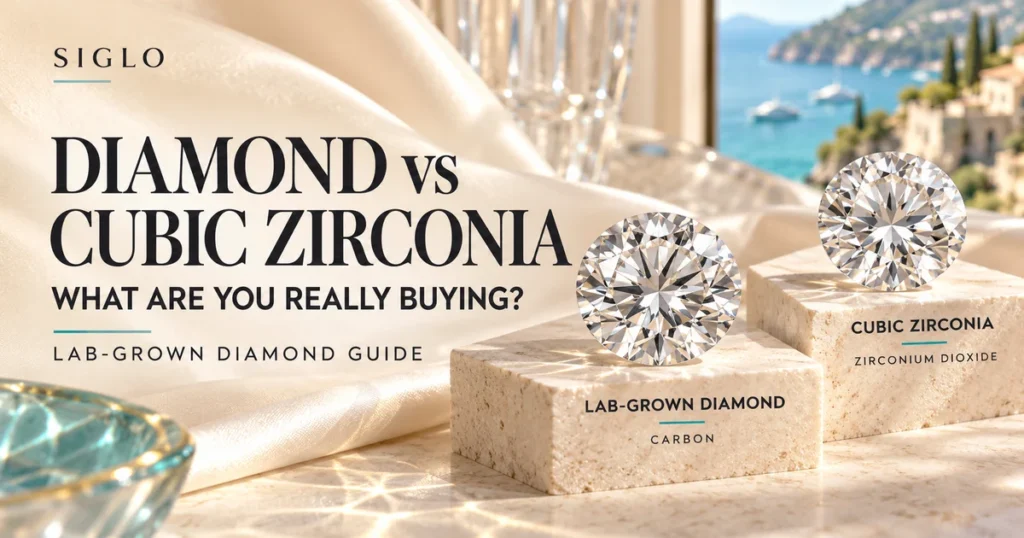
Lab-grown and natural diamonds share a carbon crystal structure and nearly the same chemical, physical and optical properties. Their growth origins differ. A lab-grown diamond is a diamond, rather than a diamond imitation, but that does not mean every diamond looks identical. Read GIA’s explanation of the material differences.
What Should You Check Before Buying an Affordable Diamond Ring?
Whether your budget is $200, $300 or more, a clear product description helps you understand what you are buying.
- Read the stone description. Lab-grown diamond, moissanite and cubic zirconia are different materials. Check the center stone and accent stones separately.
- Check the carat weight. Does the figure describe the center stone or the combined weight of all stones?
- Check the metal. S925 silver, plated silver and solid gold are different choices. A white appearance in a photograph does not identify the metal.
- Look for moving views. If available, an ordinary-light video from several angles can help you understand the ring’s appearance.
- Read the practical details. Confirm the size, care instructions and return conditions. If an independent grading report is offered, check that its details match the stone being sold.
Price alone cannot confirm gemstone identity or tell you whether you will enjoy wearing the ring.
Two SIGLO Rings to Compare
If you like a heart-shaped design, the Azure Devotion Heart Shaped Diamond Ring is listed with an ice-blue, 3ct lab-grown diamond center in S925 sterling silver.
For a different shape and color, the Rosé Promise Pink Marquise Three-Stone Ring is listed with a 5ct center and two 0.5ct side stones, totaling 6ct, in S925 silver.
That distinction matters: a 6ct total-weight ring does not mean the center stone alone weighs 6ct.
Check each product page for the current specifications and available sizes. Compare the shapes, colors and setting details rather than choosing only by the largest number. SIGLO offers several gemstone materials across its collection, so always read the individual listing.
How Can You Keep Your Ring Looking Good?
A diamond’s scratch resistance does not make the whole ring maintenance-free. The setting and finish need care too.
Follow your particular ring’s instructions about removing it before bathing, exercise or household work. Wipe it gently with a soft cloth after wear and store it separately.
Do not put it into an ultrasonic cleaner simply because the center is described as a diamond. GIA warns that home ultrasonic and steam cleaning can loosen stones. Ask a jewelry professional if you are unsure which cleaning method is suitable.
If you are still choosing a ring, ask about anything the listing leaves unclear. If you already own one, a change in appearance deserves a closer look. With cloudy lab grown diamonds, finding the cause is the first step toward choosing the right remedy.